Description
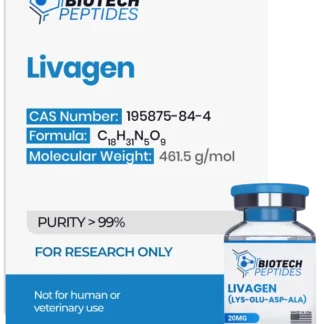
Livagen (20mg) – Research Peptide
Here’s the straight data on Livagen. This is a specific, synthetic tetrapeptide (Lys-Glu-Asp-Ala), part of the Khavinson bioregulator lineage. Think of it as a precise tool for cellular research, with a focus on chromatin structure and gene expression in immune cells. If your lab work involves aging, immunology, or cellular repair mechanisms, this compound warrants a close look.
Core Research Focus & Proposed Mechanism
Livagen’s primary observed action in studies is on lymphocyte chromatin. Chromatin is the packed form of DNA inside a cell’s nucleus. As systems age, this packing can become overly condensed, potentially silencing genes. Research indicates Livagen may promote decondensation of this heterochromatin in lymphocytes, particularly affecting nucleolar organizer regions (NORs). This process is theorized to “unlock” previously silent genetic material, leading to a gene expression profile in aged cells that resembles a younger state. The downstream effects of this are the subject of ongoing investigation.
Key Research Applications & Potential Pathways
- Immune System Research: Targets T-cells and B-cells. The proposed reactivation of ribosomal genes may influence protein synthesis and overall lymphocyte activity, which is crucial for immune response studies.
- Cellular Aging Models: Investigated for its potential to alter age-related changes in DNA organization and reduce chromosomal aberrations in cell cultures, supporting research into cellular longevity.
- Gastrointestinal (GIT) Studies: Early data suggests a potential role in mucosal protection, possibly modulating vagus nerve signaling and local inflammatory mediators like prostaglandins. Relevant for models of GIT disruption.
- Cardiac Cell Research: May indirectly influence cardiac tissue via modulation of lymphocyte-mediated inflammation. Some models of hypertrophic cardiomyopathy show altered lymphocyte chromatin, which this peptide addresses.
- Enkephalin Degradation: Acts as an inhibitor of enkephalin-degrading enzymes in serum studies, potentially elevating natural opioid levels without binding to brain receptors. A point of interest for pain signaling research.
- Hepatic Antioxidant Systems: In vitro models of liver pathology indicate Livagen may help normalize antioxidant status during hepatic stress, pointing to hepatoprotective research avenues.
Specifications
| Sequence: | Lys-Glu-Asp-Ala (KEDA) |
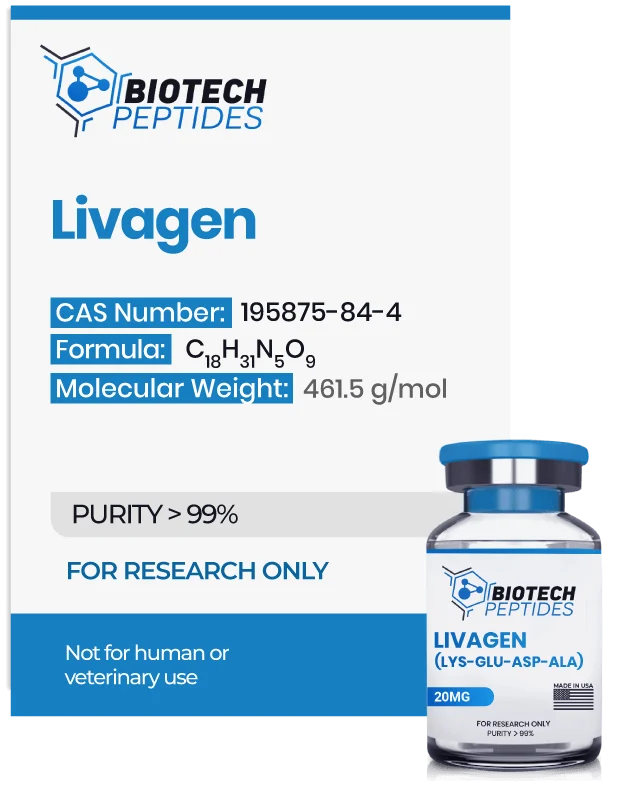
| Molecular Formula: | C18H31N5O9 |
| Molecular Weight: | 461.5 g/mol |
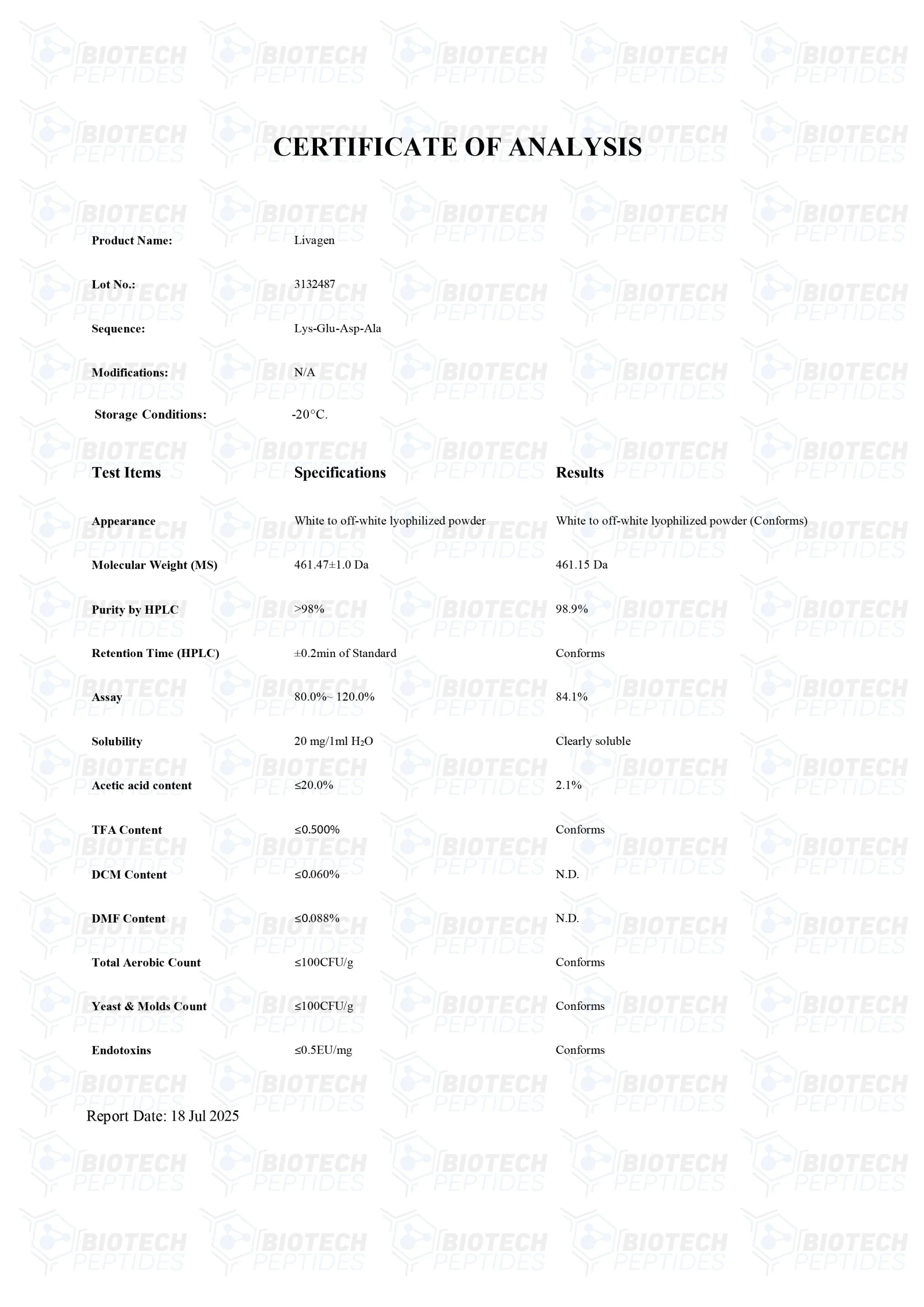
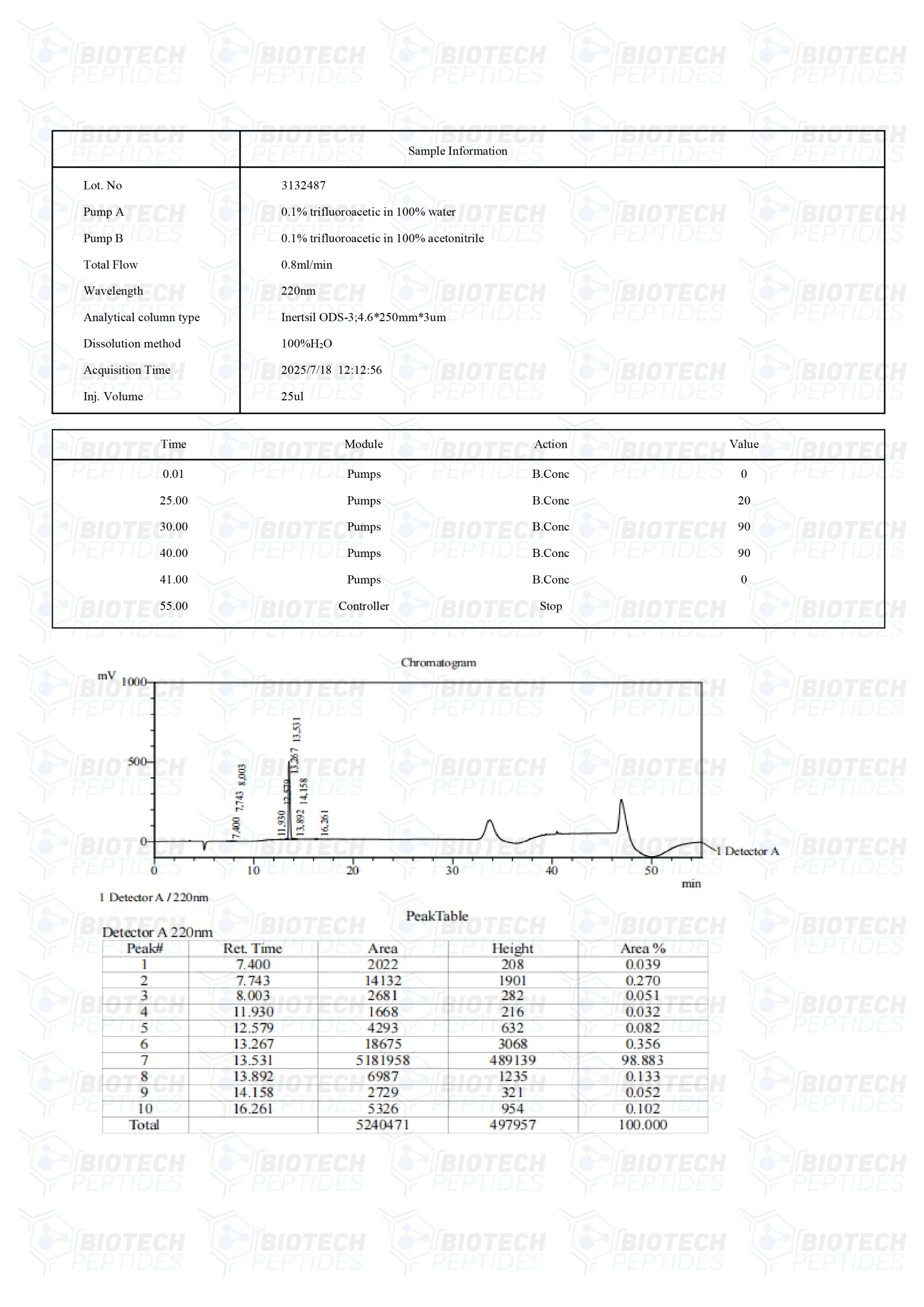
| Purity: | ≥ 98% (HPLC verified) |
| Format: | Lyophilized powder in sterile vial |
Price: $68.20
Order by 12 PM PST for same-day shipping.
⚠️ Laboratory Use Only
This
Reviews
There are no reviews yet.