Description
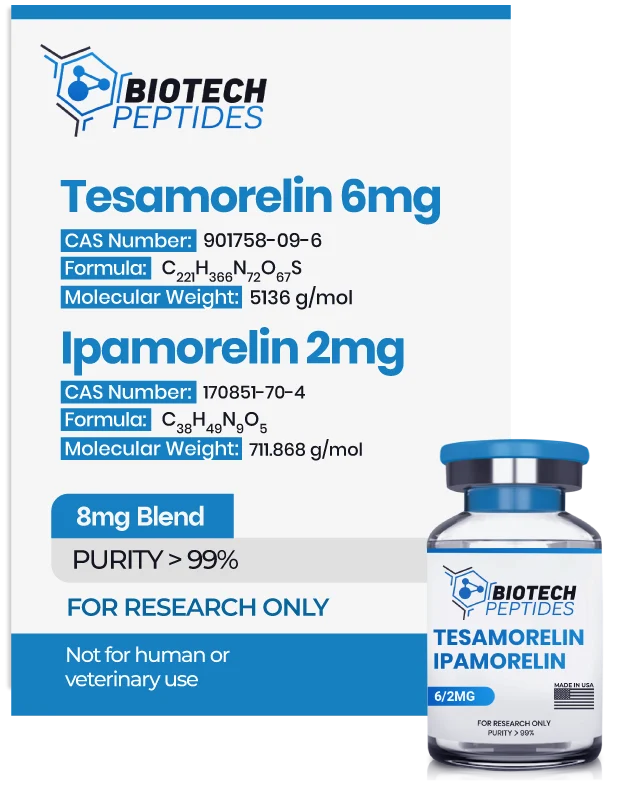
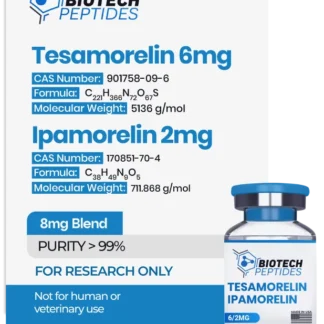
Tesamorelin & Ipamorelin Research Peptide Blend (8mg)
Price: $99.00 | Ships Same Day if Ordered by 12 PM PST.
This is a research chemical product for laboratory use only. Not for human or animal consumption. Purchase and use are limited to licensed professionals and qualified researchers. All information is for educational purposes.
What You’re Getting
This is a targeted 8mg blend of two synthetic peptides: Tesamorelin and Ipamorelin. Think of it as a two-pronged approach for research into growth hormone (hGH) pathways. One peptide talks to the GHRH receptor, the other to the GHS (ghrelin) receptor. The goal is a more comprehensive research model compared to using a single compound. We provide it pure, sterile, and ready for your controlled in-vitro experimentation.
The Breakdown: No Nonsense
Let’s cut through the jargon. Here’s what the literature suggests about these compounds in a research context.
Tesamorelin: The GHRH Analog
Tesamorelin is a synthetic, 44-amino acid peptide built to mimic Growth Hormone-Releasing Hormone (GHRH). Its key feature is stability. It’s been modified at the molecular level—specifically with a trans-3-hexenoic acid group at the C-terminus and an acetyl group at the N-terminus—to resist breakdown by enzymes. This means it has a better chance of reaching its target in a research setting.
In models, it appears to bind to GHRH receptors in the pituitary, triggering an intracellular cascade (cAMP/PKA pathway) that leads to the synthesis and release of hGH. One notable study recorded a 69% increase in overall GH levels (AUC) and a 55% increase in pulse area. It didn’t change pulse frequency, just the amount released per pulse.
Research has pointed toward its potential role in specific metabolic models, particularly those involving visceral fat. In studies modeling lipodystrophy, Tesamorelin exposure was associated with an approximate 25% reduction in visceral fat mass. It has also been observed to improve muscle density and area in certain muscle groups (rectus abdominis, psoas) in research subjects, independent of IGF-1 changes.
Molecular Formula: C221H366N72O67S
Molecular Weight: 5136 g/mol
Sequence: YADAIFTNSYRKVLGQLSARKLLQDIMSRQQGESNQERGARARL
Ipamorelin: The Selective GHS Agonist
Ipamorelin is a smaller, five-amino acid synthetic peptide. Its claim to fame is selectivity. It’s designed to interact primarily with the Growth Hormone Secretagogue (GHS) receptor—the ghrelin receptor—without significantly affecting other pituitary hormones like ACTH or cortisol.
Its proposed mechanism involves activating the GHS receptor, which may then stimulate the PLC pathway, leading to increased intracellular calcium and the release of stored hGH. One experiment reported GH secretion levels reaching 80 mIU/l, over 60 times higher than placebo levels.
Because it works through the ghrelin pathway, it’s important to note its observed effects on appetite and weight in research models. Studies report associated increases in food intake and body weight (around 15% in some models), alongside rises in serum leptin. This makes it a compound of interest for research into nutrient partitioning and nitrogen balance. Studies on catabolic models suggest Ipamorelin may help reduce urea-N synthesis by about 20% and support nitrogen retention. Additional murine research points to potential positive effects on bone formation and mineral content, linked to increased bone dimensions rather than changes in volumetric density.
Molecular Formula: C38H49N9O5
Molecular Weight: 711.868 g/mol
Sequence: Aib-His-D-2Nal-D-Phe-Lys
Why Blend Them for Research?
The theory behind combining Tesamorelin (GHRH analog) and Ipamorelin (GHS agonist) is synergistic action. You’re potentially activating two distinct receptor pathways that both culminate in hGH release. This could provide a more robust and nuanced research outcome than stimulating a single pathway. It allows for the study of their combined effects on systems like fat metabolism (where Tesamorelin may target visceral fat and Ipamorelin influences overall caloric intake), musculoskeletal tissue, and nitrogen balance.
Specifications & Use
- Product: Tesamorelin & Ipamorelin Peptide Blend
- Content: 8mg total (Blended Ratio)
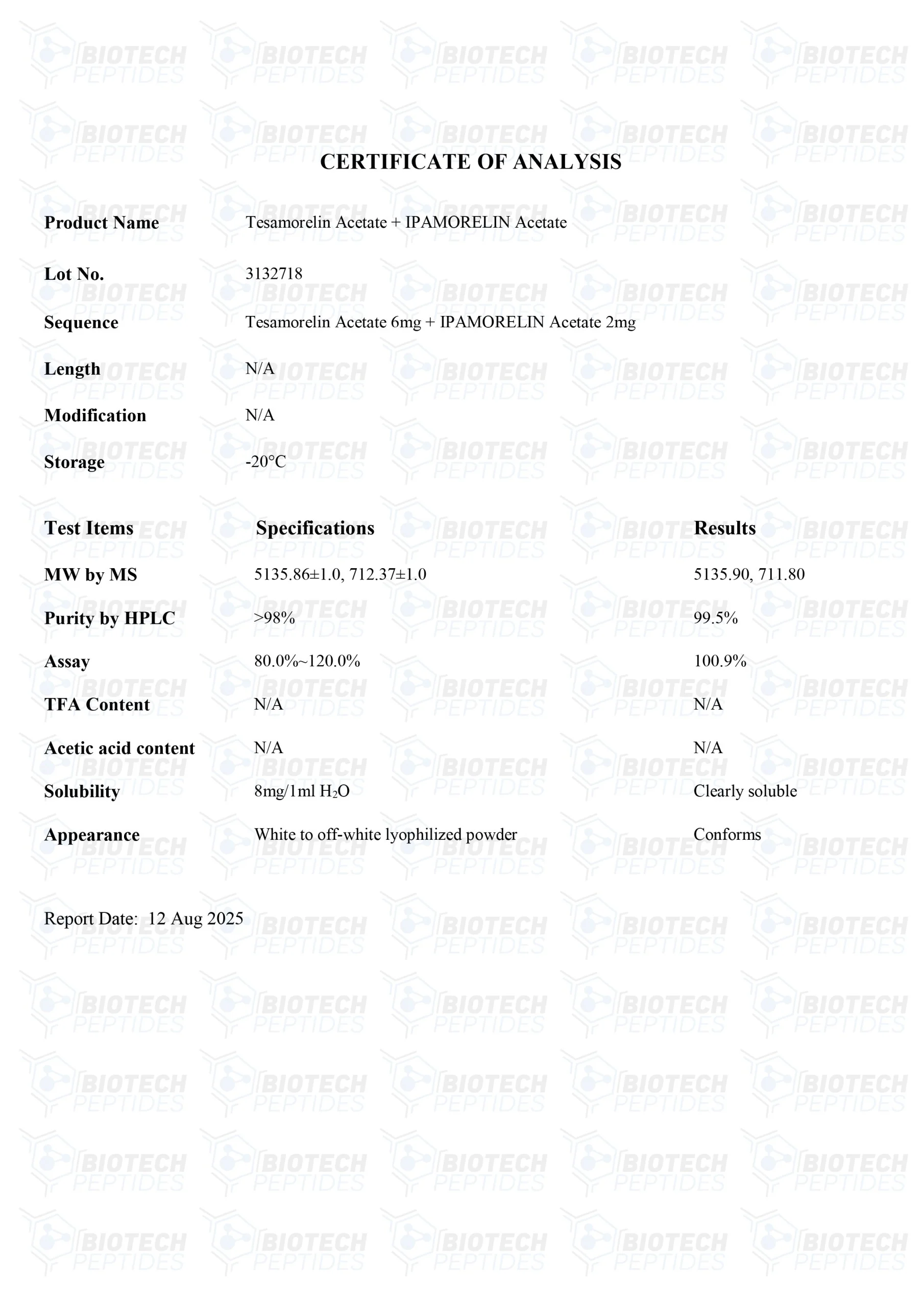
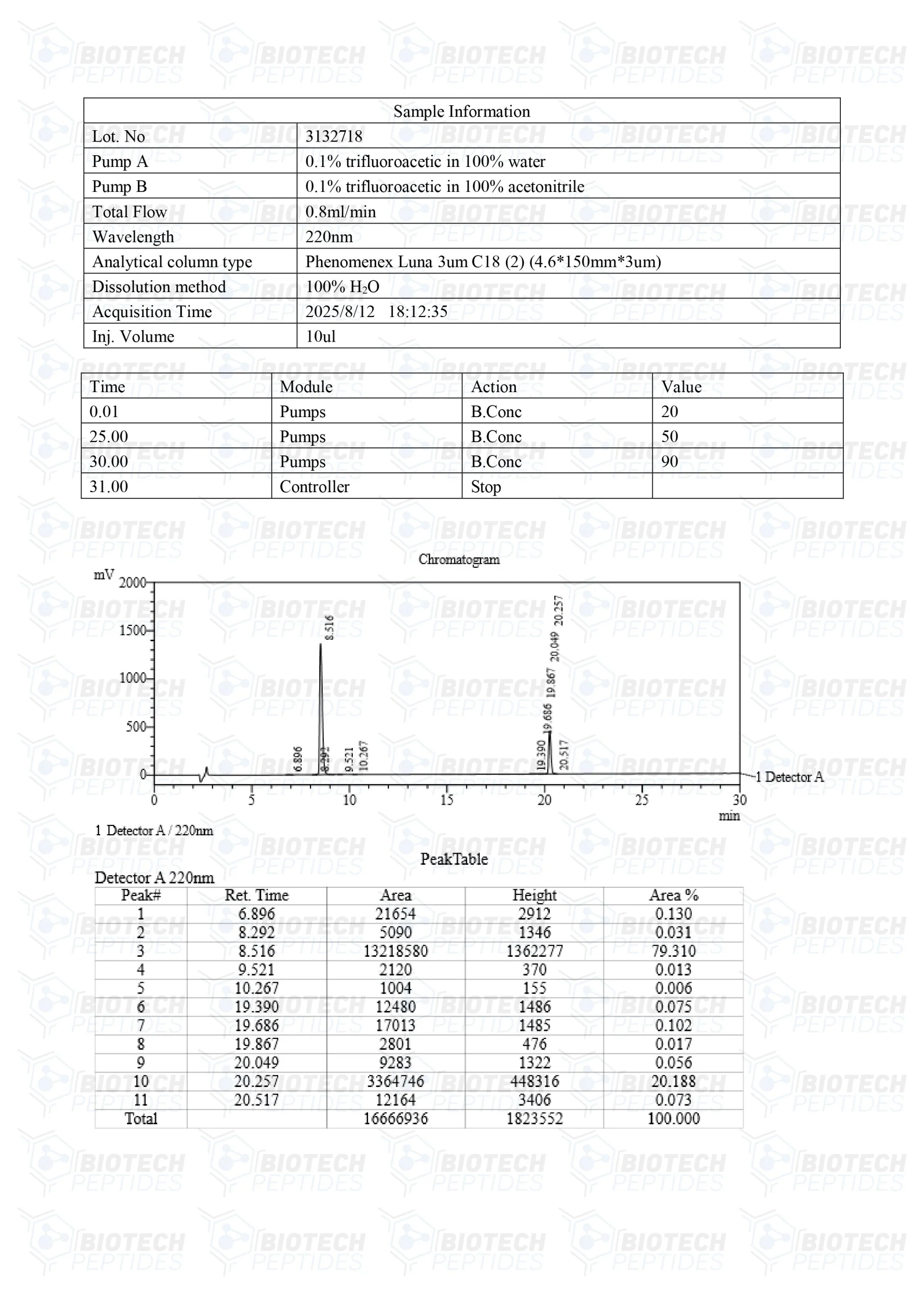
- Purity: Lab-grade, sterile-filtered.
- Format: Lyophilized (freeze-dried) powder in a sterile vial.
- Storage: Store in a cool, dry place. Stable at room temperature for research periods. For long-term storage, keep refrigerated or frozen.
- Intended Use: STRICTLY FOR IN-VITRO LABORATORY RESEARCH USE ONLY. Not for diagnostic, therapeutic, or human/animal consumption of any kind
Reviews
There are no reviews yet.